History of Lavender in the UK
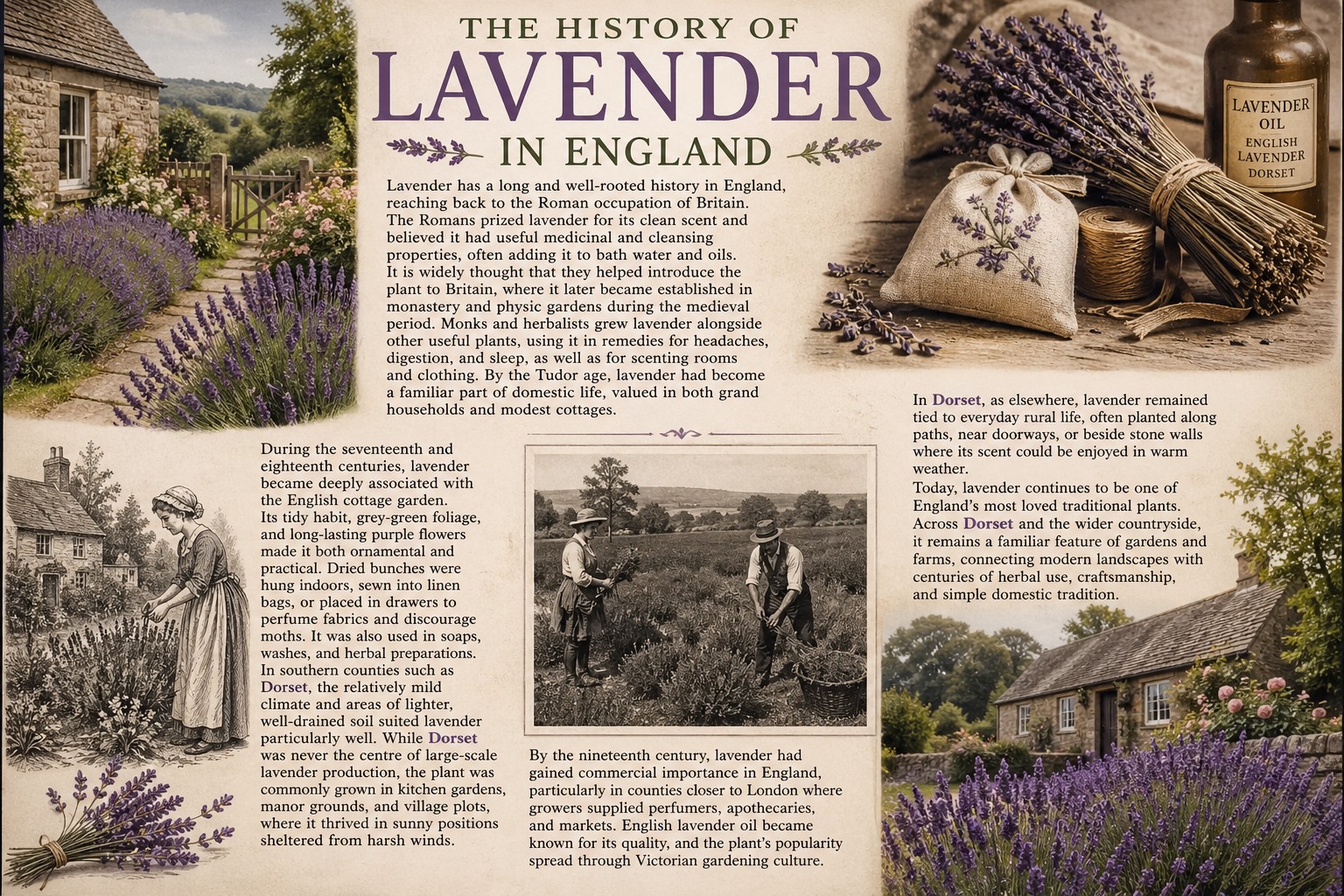
Lavender has a long and well-rooted history in England, reaching back to the Roman occupation of Britain. The Romans prized lavender for its clean scent and believed it had useful medicinal and cleansing properties, often adding it to bath water and oils. It is widely thought that they helped introduce the plant to Britain, where it later became established in monastery and physic gardens during the medieval period. Monks and herbalists grew lavender alongside other useful plants, using it in remedies for headaches, digestion, and sleep, as well as for scenting rooms and clothing. By the Tudor age, lavender had become a familiar part of domestic life, valued in both grand households and modest cottages.
During the seventeenth and eighteenth centuries, lavender became deeply associated with the English cottage garden. Its tidy habit, grey-green foliage, and long-lasting purple flowers made it both ornamental and practical. Dried bunches were hung indoors, sewn into linen bags, or placed in drawers to perfume fabrics and discourage moths. It was also used in soaps, washes, and herbal preparations. In southern counties such as Dorset, the relatively mild climate and areas of lighter, well-drained soil suited lavender particularly well. While Dorset was never the centre of large-scale lavender production, the plant was commonly grown in kitchen gardens, manor grounds, and village plots, where it thrived in sunny positions sheltered from harsh winds.
By the nineteenth century, lavender had gained commercial importance in England, particularly in counties closer to London where growers supplied perfumers, apothecaries, and markets. English lavender oil became known for its quality, and the plant’s popularity spread through Victorian gardening culture. In Dorset, as elsewhere, lavender remained tied to everyday rural life, often planted along paths, near doorways, or beside stone walls where its scent could be enjoyed in warm weather. Today, lavender continues to be one of England’s most loved traditional plants. Across Dorset and the wider countryside, it remains a familiar feature of gardens and farms, connecting modern landscapes with centuries of herbal use, craftsmanship, and simple domestic tradition.